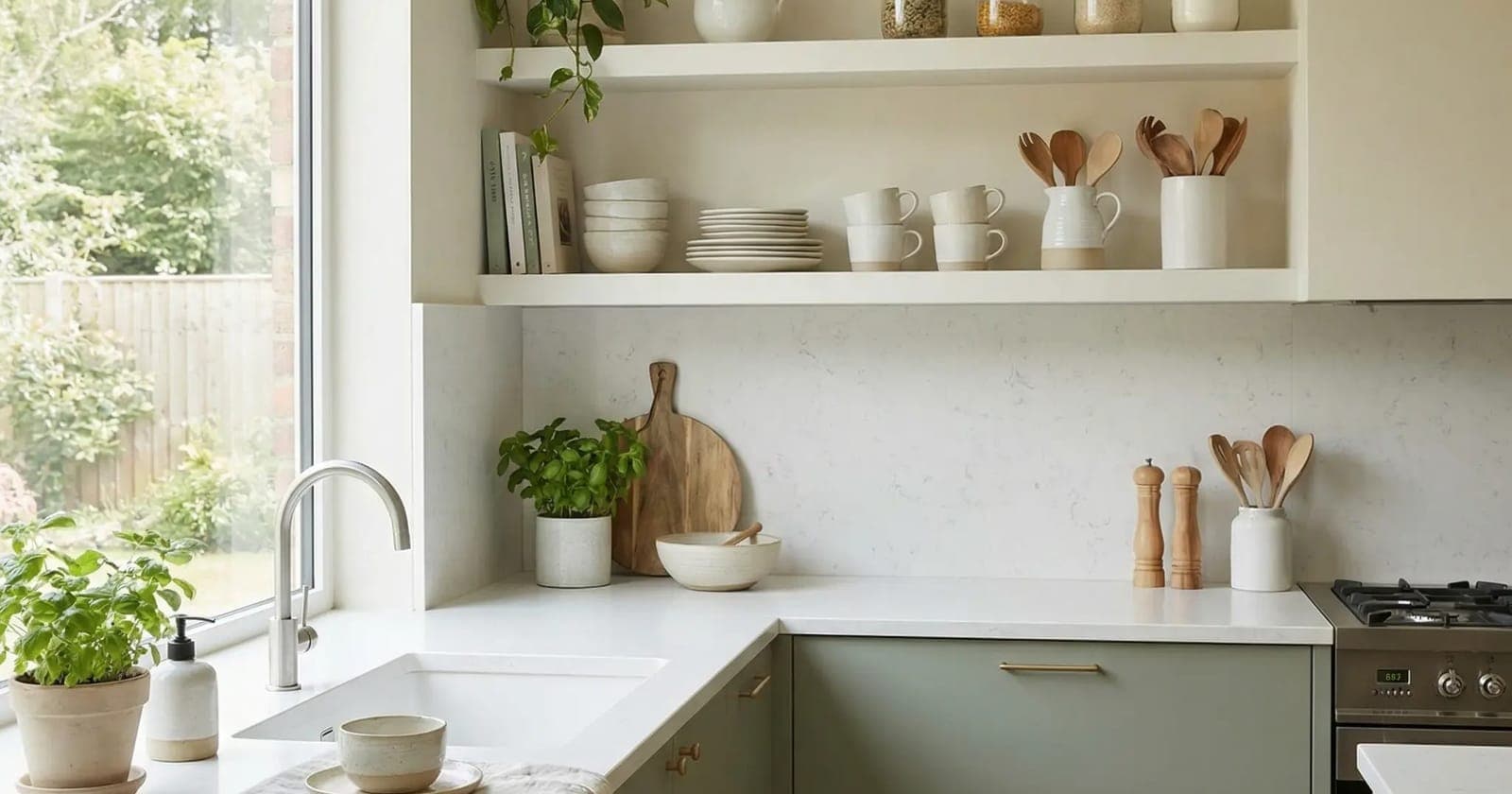
A tidy pantry saves you time, money, and waste. Here's a concrete method to organize it, even if you only have one small cabinet.
The pantry is one of the spaces that falls into disorder fastest: open packages forgotten at the back, stacked cans, duplicates you buy because you can't see what you already have. The result is wasted food and lost time every time you look for something. The good news: to organize the pantry, all it takes is an afternoon and a clear method to turn it into a functional space that's easy to maintain. Here's how.
1. Empty everything and check the expiry dates
The first step is to completely empty the pantry and set every product on the counter. Only then do you really see what you own. As you empty it, check expiry dates and make an honest sort:
- Throw away anything expired or open for too long.
- Use soon whatever is about to expire: put it in plain sight, in the front row.
- Donate unopened products you'll never use to a food collection point.
Take the chance to clean the empty shelves and drawers: starting from a clean surface makes everything easier.
2. Group by category
Before putting anything back, group products by type: pasta and rice, canned goods, breakfast, spices and condiments, snacks, baking supplies. Grouping instantly shows you how much of the same thing you have and where the duplicates are. It's also the secret to finding everything at a glance: when each category has its own zone, you stop searching and start knowing.
3. Decant into containers and give everything a "home"
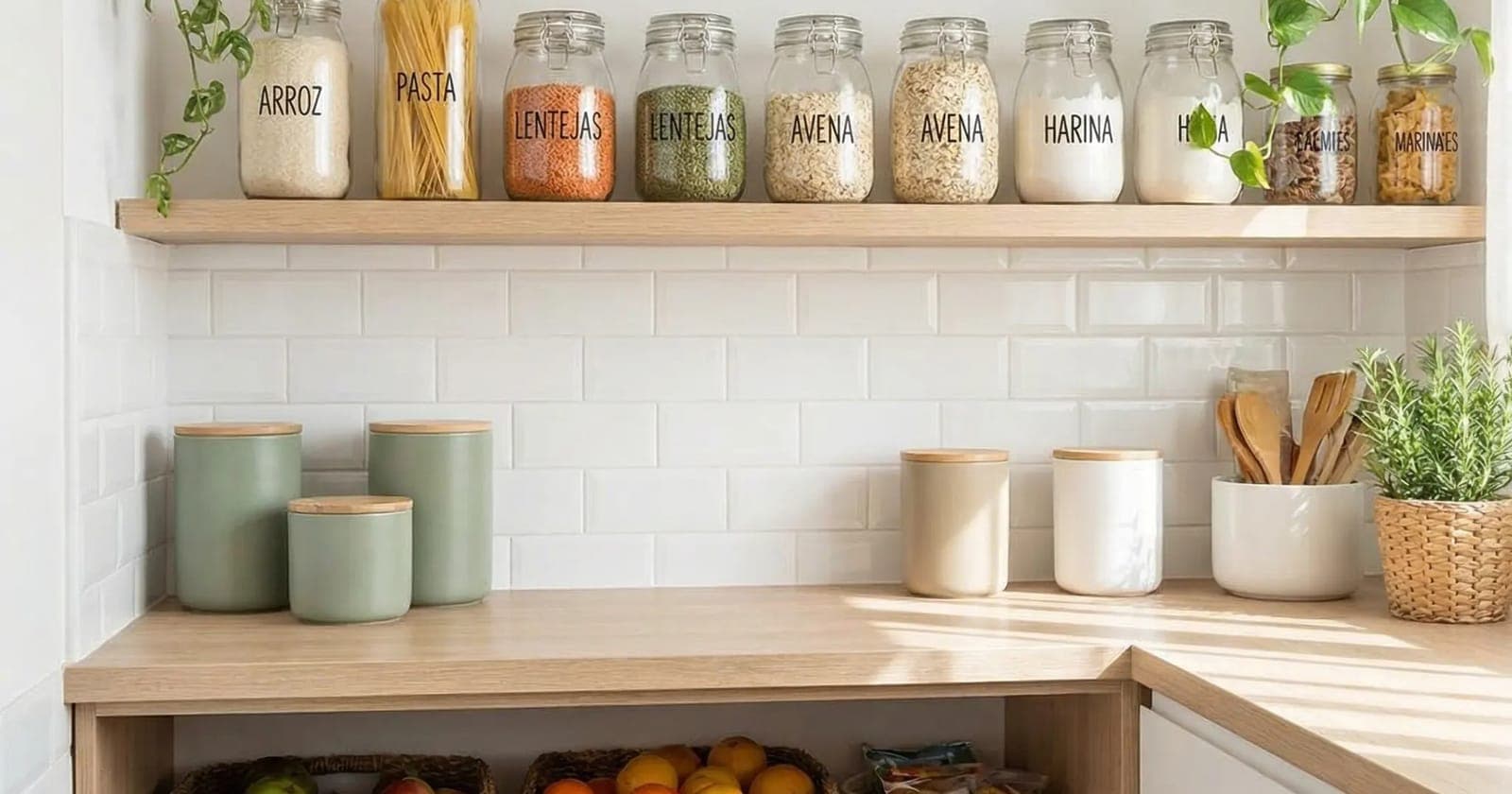
Decanting pasta, legumes, flour, cereal, and biscuits into clear containers isn't just about looks: it protects against moisture, extends shelf life, and lets you see at a glance when something is running low. Assign each category a specific zone based on how often you use it:
- Everyday items at eye level, easy to grab.
- Heavy, bulky products down low.
- Rarely used items up high or at the back.
When everything has its place, putting the groceries away becomes a matter of seconds.
4. Label and apply the FIFO method
Labels turn containers from simple jars into a system: write the contents and, where useful, the date opened or the expiry date. Pair them with the FIFO method (first in, first out): older products in front, freshly bought ones behind. That way you always use up what expires first and avoid finding forgotten packages at the back. It's the single habit that cuts waste the most.
5. Use vertical and deep space
A pantry works when you use every centimeter, including the "lost" ones. A few accessories make a big difference:
- Step risers for cans: you see the whole row, not just the front one.
- Baskets to corral small packets that otherwise topple and scatter.
- Lazy Susans for spices, oils, and jars in deep corners.
- Hooks or rails on the inside of the door for bags and utensils.
If you only have a tiny pantry or a single cabinet, the principle doesn't change: fewer categories, containers sized to the shelf depth, and no "blind" second row. Better a few clearly visible items than a packed cabinet where you can't find anything.
6. Keep a shopping list to avoid waste
Order is maintained with one simple habit: a shopping list kept up to date, stuck to the door or on your phone. Jot down a product as soon as it's running low, check the pantry before you head out, and plan meals around what you already have, starting with what's about to expire. That way you stop buying duplicates and tossing forgotten food.
When to get help to organize the pantry
Sometimes the pantry is just the tip of a wider disorder, perhaps tied to a move, a small kitchen, or simply no time to set up a system that holds. In these cases, turning to a home organizing professional makes the difference: a proven method, the right solutions for your space, and no judgment. If you'd like a tidier kitchen in Rome, request a quote and we'll organize your pantry together, shelf by shelf.