An organized kitchen makes cooking easier and life calmer. Here's a concrete method to sort zones, pantry, drawers, and countertops.
The kitchen is the heart of the home, but it's also the space that falls into disorder fastest. Stacked pots, overcrowded pantries, cluttered counters, and drawers that have become a mystery make every task harder. The good news: organizing your kitchen doesn't require new cabinets or extra space. It requires a method that starts with how you actually use it. This guide gives you the concrete steps to turn it into an organized kitchen that's tidy and functional.
1. Think of your kitchen in work zones
Before you tidy anything, watch how you move. A kitchen works best when it's organized into zones: the cooking zone near the stove (pots, pans, ladles), the prep zone around your main counter (cutting boards, knives, bowls), the cleaning zone by the sink (detergents, sponges, containers), and the pantry zone for food. Keep every item close to where you use it: cutting down on steps is the first way to cut down on chaos.
2. Declutter the pantry
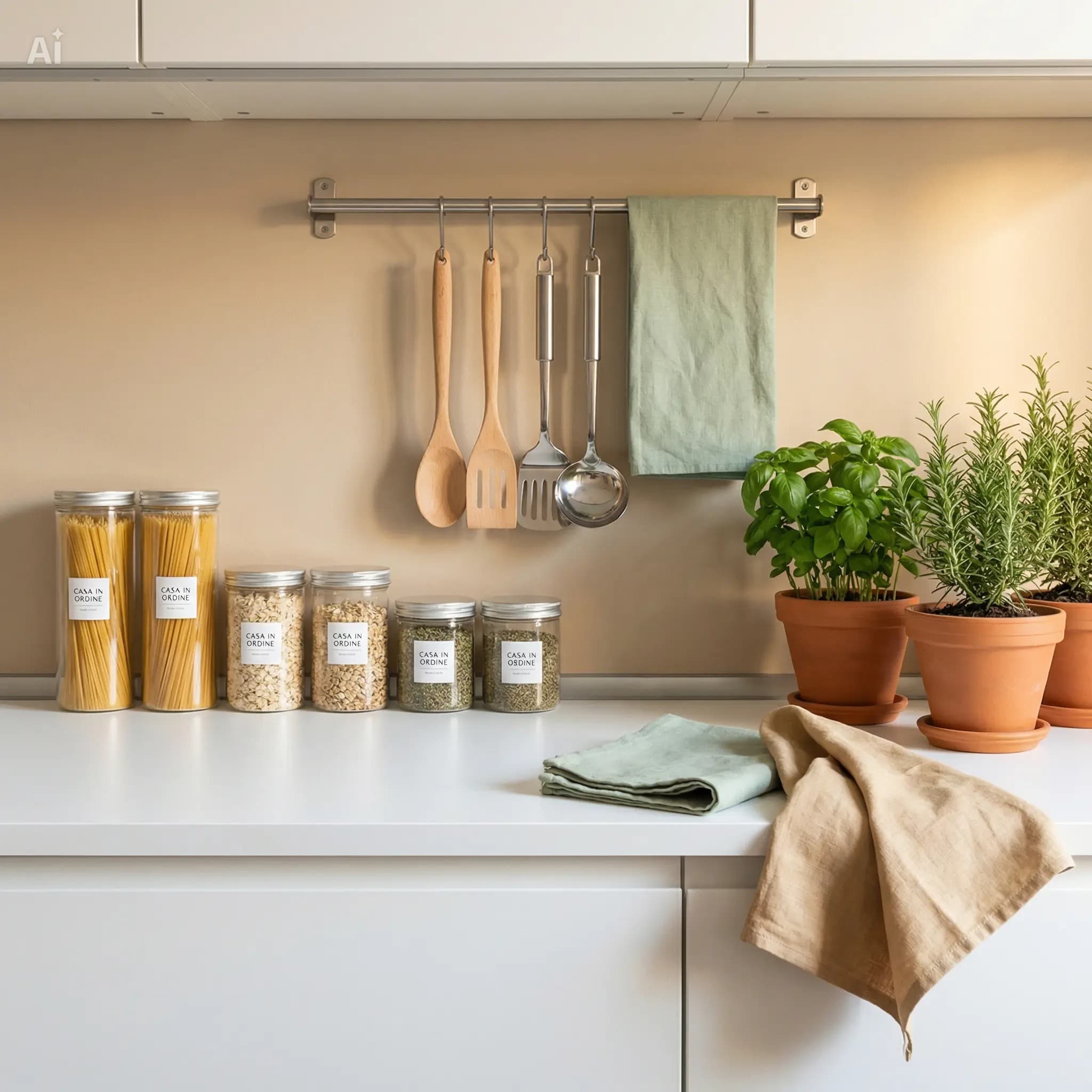
The pantry is where waste hides, and a focused effort to organize the pantry pays off right away. Empty it completely and check every product: toss what's expired, group duplicates, and set aside what you'll never use. Then reorganize by category: pasta and grains, canned goods, breakfast, snacks. Put the nearest expiration dates in front and the backstock behind. Clear containers and a few labels let you see at a glance what you have, so you stop rebuying what you already own.
3. Organize drawers and cabinets
Drawers and cabinets are where order collapses first. For drawers, use dividers that give utensils, tools, and small accessories a fixed spot: without separators, everything ends up mixed together. In cabinets, use the height with extra shelves or risers, and arrange items by how often you use them: everyday pieces at hand level, rare ones up top. Stack plates and bowls by category, and store lids upright rather than in a heap.
4. Store food the right way
Good storage keeps order and cuts waste. Decant pasta, rice, flour, and legumes into uniform airtight containers: they take up less space, protect food from pests, and make the pantry easier to read. In the fridge, give each shelf a job (dairy, leftovers, vegetables in the bottom drawer) and follow the "first to expire, first to use" rule, bringing older items forward. A few small habits make what you buy last longer.
5. Keep your countertops clear
The countertop is the most valuable surface in the kitchen and the first to fill up. The rule is simple: only what you use every day stays on the counter. Rarely used small appliances, decorative jars, and piled-up mail belong elsewhere. A clear counter isn't just nicer to look at: it gives you real space to cook and makes cleaning instant. Apply a "return rule" to your surfaces: after use, every item goes straight back to its place.
6. Maintain order with small habits
An organized kitchen is kept up with tiny gestures, not occasional overhauls. Put things away right after using them, clear the counters at night, and check the pantry once a month for expirations and duplicates. The "one in, one out" rule applies here too: each new utensil or container takes the place of one you don't use. These are light habits that keep disorder from creeping back.
When an organized kitchen needs a pro
Reorganizing a kitchen from scratch, after a move, or after years of accumulation can feel overwhelming. Turning to a home organizing professional means starting with a proven method, an outside eye, and solutions designed around your real space, with no judgment. If you want a kitchen that truly works in Rome, request a quote and we'll organize it together, zone by zone.
Want a more organized home?
Request a quote